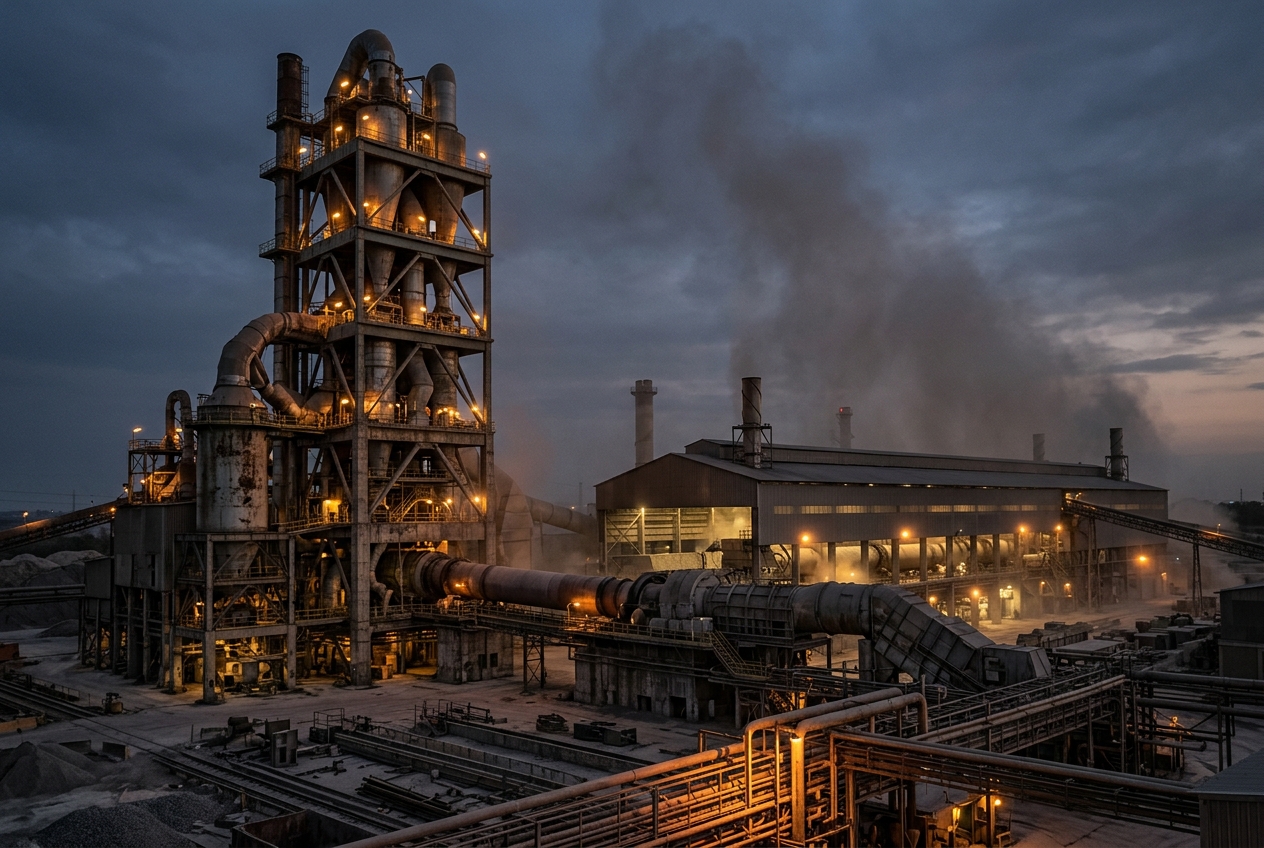
Cement chute and silo liners
Stopping wear and hang-up between the crusher and the kiln
Transfer chutes, silo walls, clinker cooler sections and hoppers see abrasive, hot, sometimes damp material around the clock. The answer is rarely one material: abrasion resistant plate where impact dominates, polymer lining where the feed sticks, and carbide protection on the few square metres that wear ten times faster than the rest.
[ 02 ] Selection
How we choose the material for this duty.
- Dry abrasive feed, high impact: Hardox 450 or 500, 8 - 20 mm, bolted or welded
- Severe abrasion, low impact: Hardox 600 in thinner section for the same life at less weight
- Damp, sticky feed causing hang-up: UHMW-PE PE1000 / PE8000 lining instead of steel
- Localised hot spots and grinding circuits: tungsten carbide tiles and buttons
- Cut to the chute development with bolt holes and countersinks, ready to install
Grades we would specify.


Questions buyers ask about this duty.
Hardox or UHMW-PE for a cement transfer chute?
If the problem is abrasion and impact, use Hardox. If the problem is material hanging up and blocking the chute — damp clinker, filter dust, raw meal — a UHMW-PE liner solves it, because material slides on it and it absorbs impact without denting. Many chutes end up with Hardox at the impact point and polymer on the sliding walls.
What thickness of wear plate should we specify?
Send the current liner thickness and how long it lasts. As a rule, moving from mild steel to Hardox 450 multiplies life three to four times at the same thickness, and Hardox 600 lets you drop thickness while keeping life, which matters when the liner has to be lifted into place by hand.
Send the duty, not just the grade.
Tell us the service conditions, the current material and what life you are getting. Our Dubai desk comes back with the grade, the thickness and what is in stock.