"Certified material" is a phrase that covers everything from a typed statement of compliance to a witnessed test report. The EN 10204 inspection document types tell you which one you are actually getting.
The document types, plainly
- 2.1 Declaration of compliance. The producer states the product meets the order. No test results.
- 2.2 Test report. The producer states compliance and gives results of non-specific testing — tests not necessarily on your material.
- 3.1 Inspection certificate. Results of specific testing on the product supplied, validated by the mill's own independent inspection department.
- 3.2 Inspection certificate. As 3.1, but countersigned by an independent third party or the purchaser's representative.
Why 3.1 is the practical standard
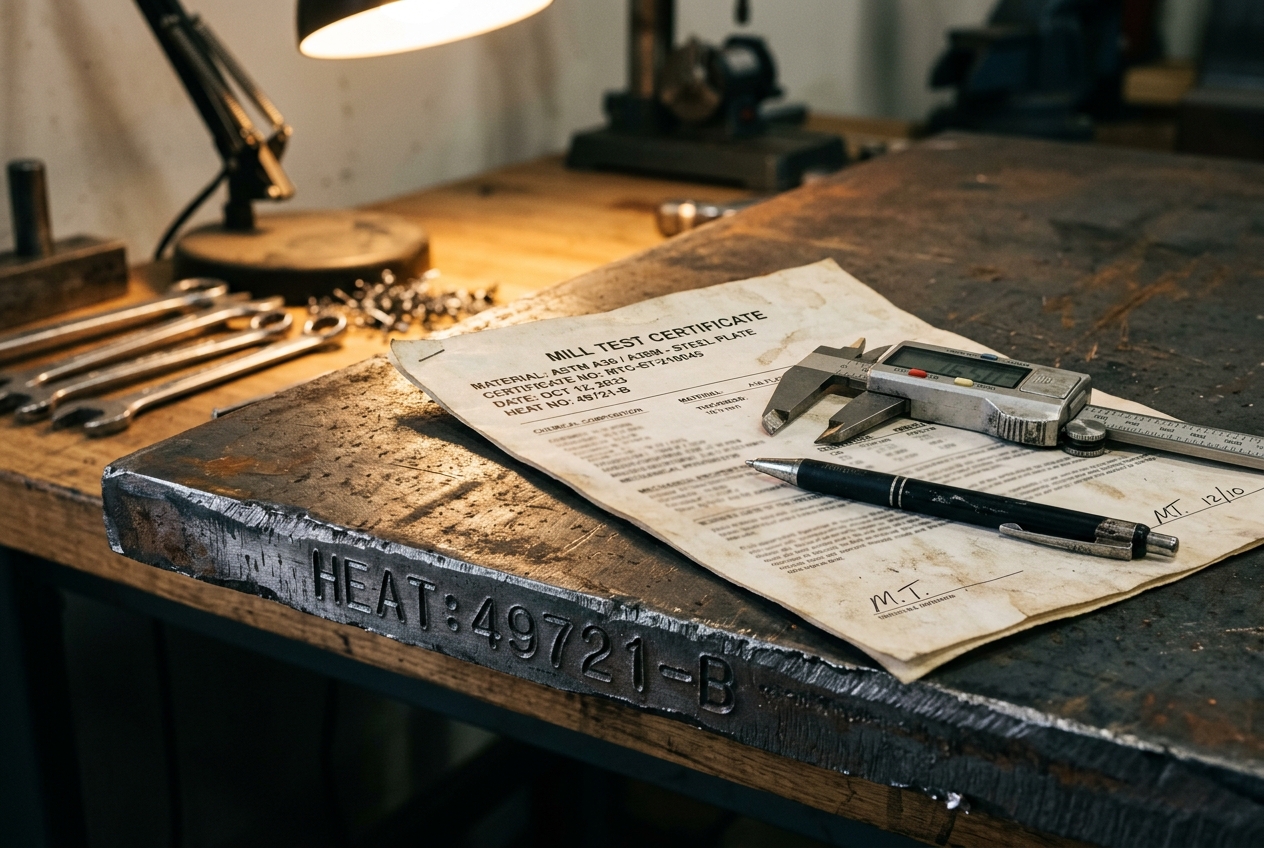
A 3.1 certificate ties a heat number to the actual chemical analysis and mechanical test results of the metal you received. That chain — plate marking to heat number to certificate — is what lets you answer three questions years later:
- Is this material the grade the drawing called for?
- Do its properties meet the standard it was bought against?
- Which other items came from the same heat?
Without traceability, a problem on one item becomes a problem across everything you cannot rule out.
Protect the chain in your own yard
- Do not cut away plate marking without transferring it first.
- Record heat numbers on your cut part tags.
- Keep certificates with the job file, not just in the purchase folder.
- Use positive material identification on receipt where grades look alike.
Every heat Axicor supplies comes with EN 10204 3.1 documentation as standard, and we transfer and record markings through profiling. Where a project requires 3.2, we arrange the third party inspection.
CertificationEN 10204Quality